
|
From our deepest prehistory, storytellers worked in immediate contact with their audience. The bard or singer developed his tale as a chain of easily remembered rhymes and then picked up a lyre if he was Greek, or a harp if he was Irish, and chanted them in the great hall after dinner. If you, the audience, liked what you heard, you gave him table scraps and a cup of wine. If not, you pelted him with bones.
Then in the 1400s Johannes Gutenberg invented movable type and spoiled all the fun by giving rise to the mass market. Suddenly, telling a story became an investment in typesetting, press time, paper, and binding. An industry of agents, editors, and accountants rose up to determine whether there was enough of a market to support this investment in the story. The chanted poem became the “novel” (from the Latin root meaning “new,” or a passing “novelty” for jaded readers). Homer dined out for years on just two long poems. Today’s author has to produce a couple of books a year just to stay afloat—and most of us don’t have three good books in a lifetime. Over the last couple of decades the economics of publishing have tightened, especially after a 1979 change in tax law made it much more expensive for publishers to maintain an inventory of unsold books. In the current fiction market, even established authors may not be able to find a publisher for their most recent work. An author without the tail wind of a bestseller must struggle doubly hard to reach new readers. And it’s even harder if that author is trying to break out of a genre like science fiction or romance into the general fiction category.
Just when book publishing looked bleakest, the Defense Advanced Research Projects Agency invented the worldwide web, or internet. And now the publishing world is finally catching up with at least three viable markets for self-published works in portable reader formats: Amazon's Kindle, Barnes & Noble's Nook, and Apple's iBooks. No printing press, no paper, no investment in inventory, and no editors and publicists to tell you what books are worth reading. Some of these platforms may disappear over time, and others may arise. It’s still an open question yet as to who will dominate the market: traditional paper publishers or the ebook distributors. But with these new formats, authors once again have direct contact with readers. So you’ll have to decide for yourself if the books below are any good.
Note: The sample chapters are in Adobe Acrobat™ PDF format, designed for an 8½x11-inch page. You should have the Acrobat Reader installed on your system before clicking on the link. If you don’t have Reader, please visit Adobe Systems Incorporated to download their free software.

|
Three Sisters: Life in the ShadowsThe three daughters of David Orsini are nothing alike. Juliana, who styles herself “Contessa delle Fate” after an old family myth, is a free spirit who loves to travel. Caterina, who is crippled with mysterious pains in her back and legs, pursues a career as a financial analyst climbing the corporate ladder. And Gisella, who mostly stays at home, has big dreams and stares out the window at the city lights. When separate choices by Juliana and Caterina bring them all together in the same apartment, they begin to discover clues and follow reasoning that leads the elder sisters to believe that their younger sister’s stories about how their father died—when she was all alone with him—are not credible. Finally, Juliana insists that Gisella get psychiatric counseling, and the entire family structure comes apart. This psychological novel is a departure for science fiction and technical writer Thomas T. Thomas. It stems in part from his thirty-plus years of volunteering with the National Alliance on Mental Illness (NAMI) in writing up the bimonthly speaker meetings of the local East Bay chapter. Sample Chapters, Free Download Available as an ebook on Amazon.com for $2.99, and in paperback for $14.95. Cover photo © vesnaandjic/istockphoto.com |
|
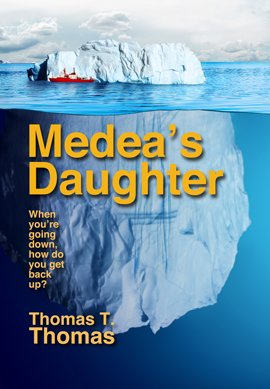
Medea’s Daughter Graduating in 1970 with a degree in mechanical engineering, Danielle Wheelock lands a plum job at Mannheim Construction, Inc., in San Francisco. She moves into a group house on Haight Street, ground zero for the Summer of Love from 1967, and begins working as a professional engineer. Her first assignment is more clerical than professional: tracking rebar shipments in the foundation of a nuclear power plant. When she discovers an anomaly that leads to the project’s being canceled, her career takes a sideways skid, and Dani ends up in engineering purgatory. Then, as if stepping out of her dreams, a French hydrologist with backing from the Saudi government brings Mannheim a juicy proposal to capture icebergs in the Antarctic and haul them up to the Red Sea port of Jeddah. And Dani is the only person who can make this scheme work. Will the iceberg project be her rescue or become her doom? She must work harder than ever to find out. This third novel in The Judge’s Daughter series, timed soon after the close of The Professor’s Mistress, follows the third generation of the Wheelock family and its passage from small-town dealings in central Pennsylvania into the modern world of international engineering and construction … and other businesses far less savory. Sample Chapters, Free Download Now available on Amazon Kindle, Barnes & Noble Nook, and Apple iBooks Cover Photo (Iceberg) © Niyazz/iStockphoto® |
|
|
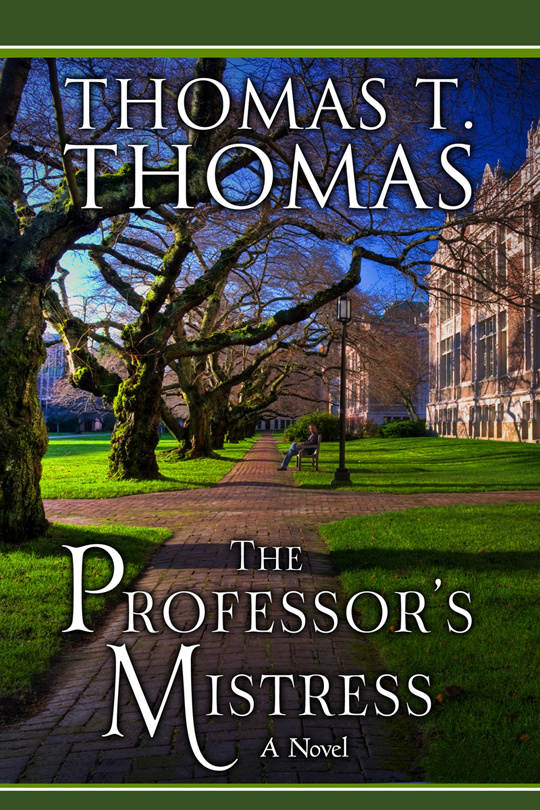
The Professor’s Mistress“Old boats are like a beautiful woman,” observes a passerby on the dock as he inspects the steam yacht Galatea. “They call to you. They entice you. And then they steal your soul.” He calls that feeling “the sickness.” William Henry Wheelock has achieved his ambition of becoming a professor of classical studies and settled down in a cottage on campus with his wife Jane and young daughter Dani. But Jane is ill-suited to the quiet, academic life and—in a fit of rage ignited by an old misunderstanding—suddenly leaves him for parts unknown. William Henry plods on stoically, teaching his classes and raising his daughter, while the social upheavals of the 1960s change the world around him in ways he doesn’t always understand. Then one day the embattled professor falls under the spell of an older woman, Galatea, an antique from the Gilded Age, and his life promises to change completely. Sequel to the Wheelock family history that began with The Judge’s Daughter, this novel follows the next generation through a turbulent twenty years filled with longing, love, greed, deception, and madness. Sample Chapters, Free Download Now available on Amazon Kindle, Barnes & Noble Nook,
and Apple iBooks Cover photo by Rick Hyman via iStockphoto® |
|
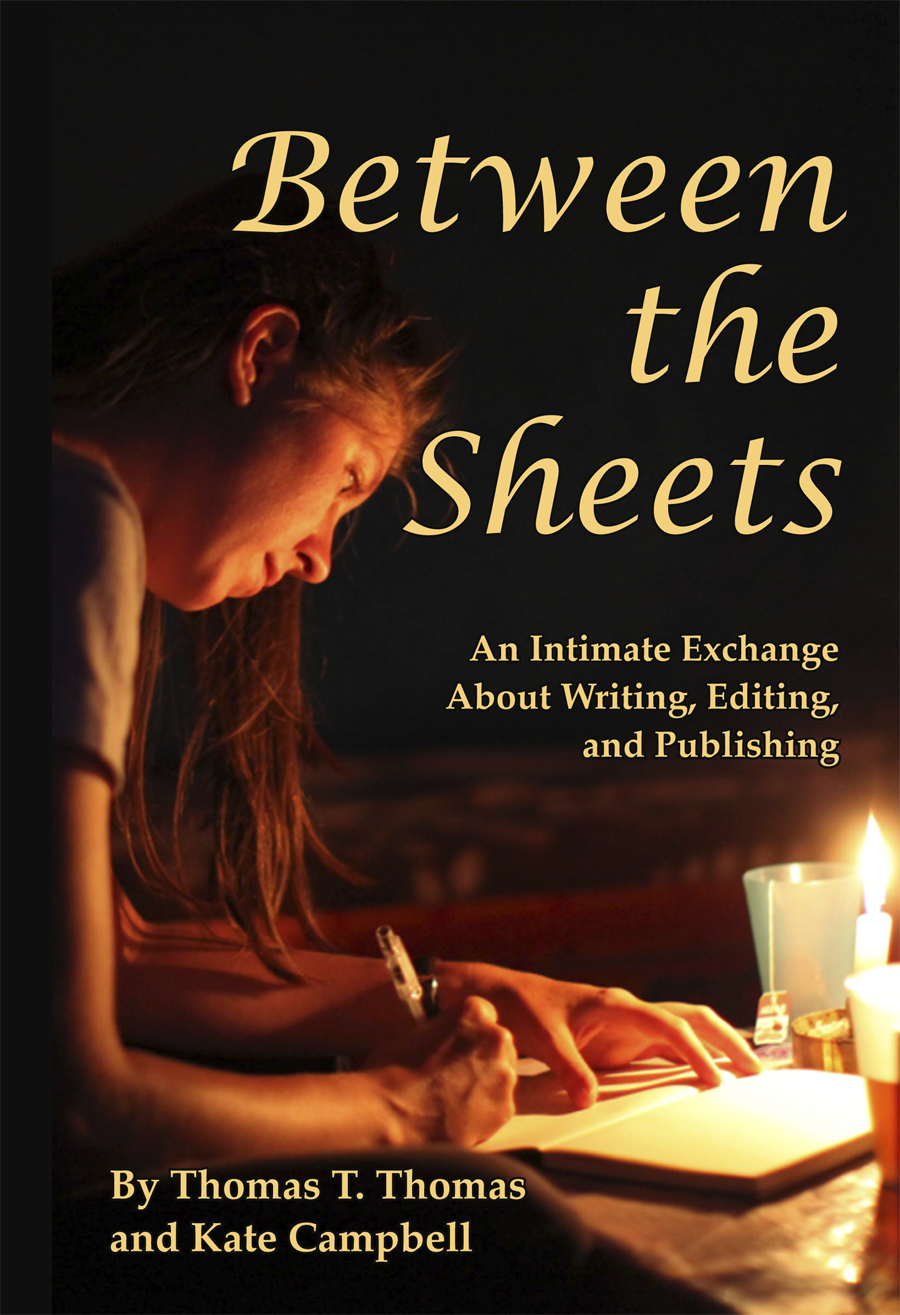
Between the Sheets: An Intimate Exchange About Writing, Editing, and Publishing By Thomas T. Thomas and Kate Campbell Writing a novel is a private process. The author labors alone, sometimes at night—especially if there’s a day job to fulfill. Getting the story down requires space and time to think, dream, and create freely. But submitting that story for editing and preparation as a commercial book is another matter. It’s a collaborative process that calls for the author to stand up for the story and the vision that inspired it, but she also has to realize that it may not be perfect and could be improved. It’s a process that requires trust and respect, a pliant spirit, and intellectual mettle. The editor has to understand that he does not control the story or the vision, but he has a duty to readers who will come after him. His job is to help the author make the story as complete, clear, consistent, and accessible as possible. The editor works on many levels: conceptual, narrative, voice, diction, grammar, and punctuation. Between the Sheets is a look at this collaborative process through creatively charged email exchanges between two old friends and former colleagues: one a new author who has labored for some years on a first novel, the other a former book editor and author with a dozen novels behind him. Together they explore what it means to be a writer in the digital age, and they offer a peek behind the curtain at writer and editor shaping a story for its ultimate purpose—a book that meets the needs and expectations of readers. Available in paperback at Amazon.com for $6.99 Also available on Amazon Kindle, Barnes & Noble Nook, and
Apple iBooks Cover photo © 2011 Simon Bond |
|

|
The Judge's DaughterBefore the frenzied modern era of superhighways, television, and the internet, American life was lived in small towns, in places where families knew every neighbor; where the bonds of love and hatred, friendship and feud, were tightly woven across generations. In such a town lived Robert Wheelock. He was soft-spoken, intelligent, Harvard-educated, and seemingly destined from birth for great things. His father, the county judge and owner of the local railroad and electric company, was wealthy and respected. So Robert’s own success appeared assured … until the judge’s sudden death dealt a blow to his expectations. In this kaleidoscopic book spanning three decades of American life, Robert Wheelock falls in love with his beautiful cousin and takes on his first clients as a lawyer with his own practice. He fights a series of bitter skirmishes with his stepmother, suffers personal tragedy and loss, and starts down the path of public life and civic duty first blazed by the judge. And then Robert commits an indiscretion that will haunt him for twenty years—an indiscretion that will jeopardize his marriage and his place in the community. The Judge’s Daughter is the story of a man’s conscience and his capacity for love, set in a time and place that will never exist again, but that will live forever in the American imagination. Sample Chapters, Free Download Now available on Amazon Kindle, Barnes & Noble Nook,
and Apple iBooks Cover photo by Greg Henry via iStockphoto® |
|
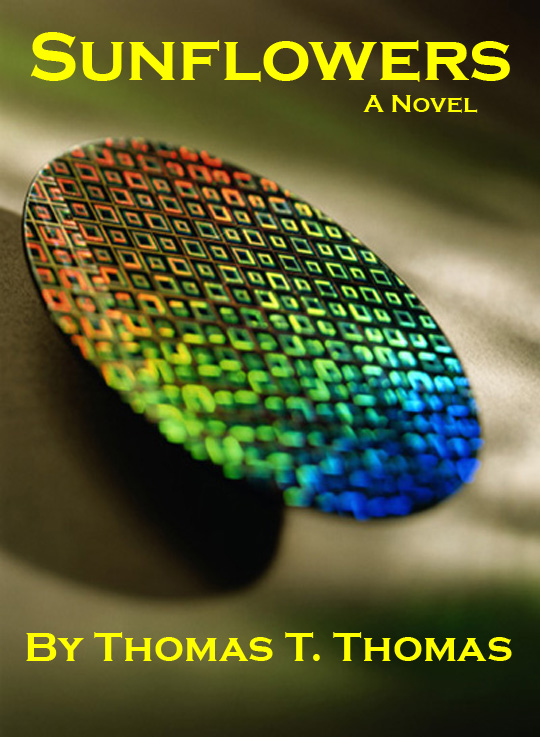
Sunflowers Amid a growing national energy crisis, a radical environmental group destroys the generating capacity of Hoover Dam, the engineering masterpiece of the 20th century. A new President responds by vowing to build the engineering marvel of the 21st century: clean solar power from an orbital platform. The politician doesn’t understand the huge challenges his project involves. And no one plans on the determined, ultimately violent, opposition of the world oil cartel. The project tests the ingenuity and stamina of five people: Harley Waters, the presidential assistant who must bring the satellite project to fruition through the maze of Washington politics; Nikolas Starik, the construction engineer who must solve the project’s various puzzles and make it viable; Raven Howell, the clever publicist who creates a climate of acceptance for the solar power satellite; Willem Cerkes, the Butcher of Mostar, who is hired by international oil interests to make sure it never flies; and Janey Pulaski, who single-handedly poses the greatest threat to the satellite’s future. This novel is an inside look at the high-stakes world of engineering project management: part inspiration, part politics, always risky. It will appeal to readers who treasure the aha! moment of creative insight, who enjoy the interplay of politics and personality, and who relish the adrenalin rush of looming catastrophe and the triumph of winning a fight to the finish. Sample Chapters, Free Download Now available on Amazon Kindle, Barnes & Noble Nook, and
Apple iBooks Also available at the Baen eBooks site. Cover Photo © Steve Cole/Getty Images, Inc. |
|

|
Trojan HorseSearching for biotech solutions to environmental problems, a senior researcher at Cumulus Biologicals creates a microbe that doesn't just break down oil spills but turns sweet crude into a tar-like solid. Applied to an oil-laden beach, it would cake the sand into asphalt and make removal impossible. The bacterial culture is a wrong turn for the company and is marked for disposal. However, a beautiful industrial spy and a ruthless arms dealer plot to divert the sample to an Arab buyer, who is under orders to discourage competition in the oil patch and raise the volume of petrodollars flowing into his country. He sees immediately that the bacterial byproduct would freeze oil fields, block wellheads, and clog pipelines—if it ever got near them. Only one thing stands in the way of their deal: a determined young economist named William Clive. He recently joined a consulting firm that covers for a national agency battling foreign theft of American industrial secrets, and he takes his job very seriously. Sample Chapters, Free Download Now available on Amazon Kindle, Barnes & Noble Nook, and
Apple iBooks Also available at the Baen eBooks site. Cover Photo © Chad Baker/Getty Images, Inc. |
|
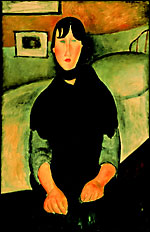
Unveiled Face of a Woman No. 133 What happens when a democratic and pluralistic society experiences a major demographic and cultural shift? Old values disappear. New norms take over. Think of Russian in November 1917. Or Germany in 1933. And in those societies the triumphant new masters were related to the old regime by ethnicity, at least, if not by actual culture and values. As birth rates in the world’s economically developed societies drop well below replacement levels for their modern, educated, cosmopolitan population, that population’s remaining heirs will face a new kind of death. It will be almost as hard to watch as to live through. Amedeo Modigliani, |
|